In the household, DIYers often use small, cordless heat guns for a variety of projects. Common uses include thawing frozen pipes during winter cold snaps, stripping paint and old wallpaper when renovating or redecorating, removing flooring, upholstering or repairing furniture, and more.
Boat and yacht owners almost always protect their property with vinyl coatings. They also usually include naming and other personalized decorations. Specialized wrap shops customize boats with distinctive vinyl wrapping. Read More
Hot air tools can even help in the kitchen to quickly roast coffee beans, sear meat, melt chocolate, or defrost the freezer – not to mention at-home candle making. The maximum operating temperature on these devices ranges, with some reaching as high as 990 degrees Fahrenheit.
Industrial manufacturers use heat guns of variable temperature to perform more complex and heavy-duty undertakings. These tasks can include:
While some of these jobs have lower operating temperature requirements, industrial heat guns can reach 1,400 degrees Fahrenheit.
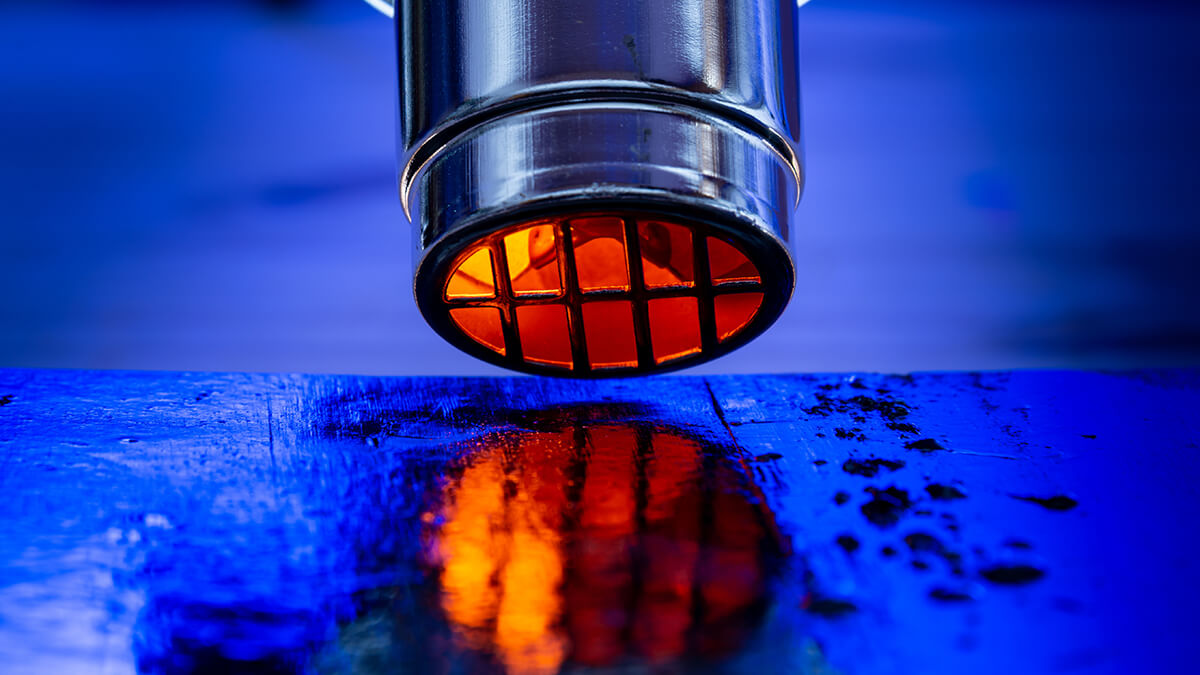
Close up of the heating element inside a hot air tool nozzle
Below are a few specific industries that rely heavily on hot air tools to manufacture, maintain, and enhance their products.
Heat guns are instrumental in building airplanes, and spacecraft for that matter. These electrically-heated power tools are particularly useful for heat shrinking, soldering, sealing, cauterizing, binding, shaping, and attaching various materials. These procedures apply to different aspects of construction and repair of wire harnesses, circuit boards, and exterior/interior components, including fiberglass and carbon mesh fiber, flooring, plumbing, and seating.
The automotive industry uses heat guns to manufacture vehicles (with many similar applications to the aviation industry). Aftermarket modifications, including window tinting and decorative vinyl wraps, are also typically applied with these tools.
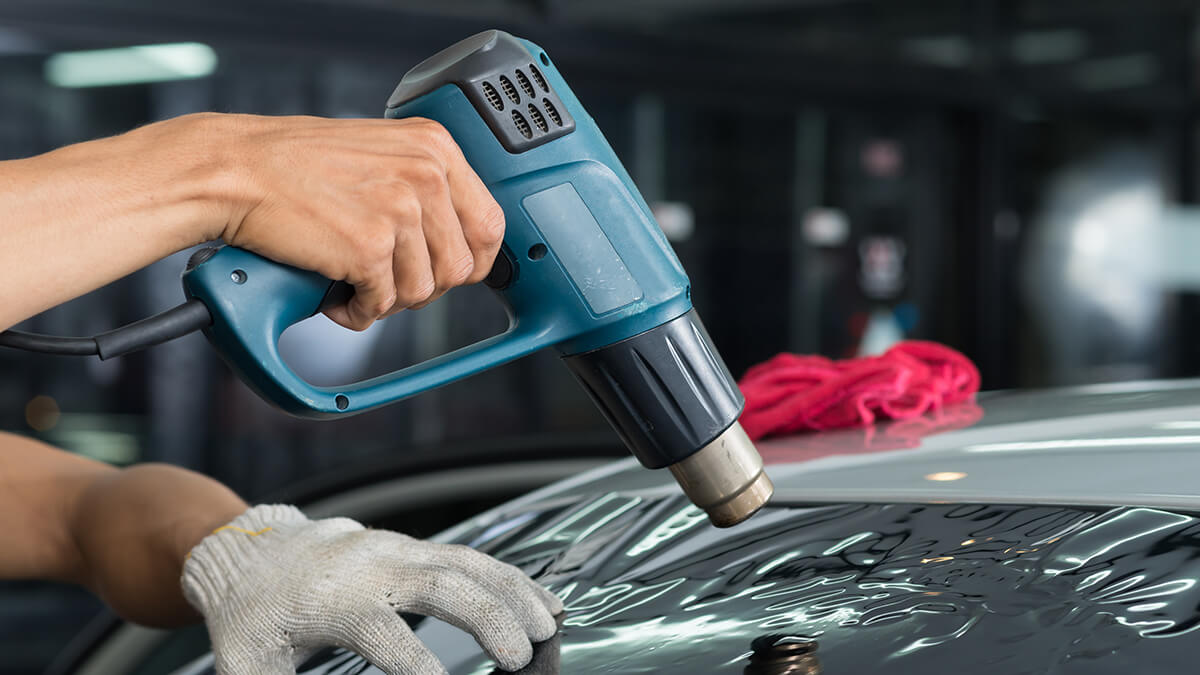
Heat guns are used to apply protective layers to vehicle windshields
These tools are also helpful in autobody shops for repairs and part replacement. They are useful when fixing dents and scratches. For example, a hot air gun might be used to soften and mold a bumper back into place or to return a dashboard to like-new condition. Additionally, heat guns can cure adhesives and aid in affixing leather patches. Conversely, old adhesives (such as bumper stickers, fillers, and putty) can be easily removed with help from a hot air tool.
Boat and yacht owners almost always protect their property with vinyl coatings. They also usually include naming and other personalized decorations. Specialized wrap shops customize boats with distinctive vinyl wrapping.
Using hot air tools during application is key to ensuring this vinyl is correctly adhered to the surface and remains intact. Protective vinyl must withstand exposure to water, the speed of travel, and extreme climate events such as hurricanes. If not properly applied at the right heat gun operating temperature, the wrap can peel off, exposing the boat to severe damage. Specialized heat guns come equipped with temperature monitoring and guiding laser capabilities for these applications.
First and foremost, be sure to purchase a high-quality hot air tool with features that safely and effectively support your needs. No matter what you’re using them for, it’s essential to follow best practices for heat gun safety. Accidental high-temperature exposure can cause severe burn injury.
Keep in mind the following safety tips:
Avoid Costly Non-Compliance
Protect your startup from penalties and reputation damage.